
Sibionics GS1 accuracy and safety: MARD, CE certification and who it is for
13 June 2026 · By Sibionics · Updated 17 June 2026
Why accuracy matters in a glucose monitor
When a device is going to inform how you think about your glucose, you naturally want to trust the numbers it shows. Accuracy is therefore one of the first things people ask about with any continuous glucose monitor. This article explains, in plain terms, how the SIBIONICS GS1 performs, what its certification means, and who it is approved for. It is educational and not medical advice, so your doctor or diabetes team is the right partner for decisions about your own care.
What MARD means
The most common way to describe CGM accuracy is a measure called MARD, which stands for Mean Absolute Relative Difference. In simple terms, it compares the readings from the sensor against reference blood glucose values and expresses the average difference as a percentage. A lower MARD indicates readings that sit closer to the reference, so a smaller number is better.
MARD has become the standard shorthand for comparing the accuracy of these devices. It is helpful to understand the idea even if the statistics behind it are detailed.
How the GS1 performs
The numbers
The SIBIONICS GS1 has an overall MARD of 8.7 percent for ages 3 to 17 and 8.83 percent for ages 18 and over. Both figures sit in the single digit range, and SIBIONICS positions the GS1 as offering industry leading accuracy. The brand frames this in terms of confidence, describing the goal as giving people the freedom to manage diabetes with confidence.
The inclusion of a separate figure for younger ages is meaningful, because it shows the device has been assessed across different age groups rather than only in adults.
Accuracy you can rely on day to day
Accurate readings matter because they support the everyday decisions you make and the conversations you have with your healthcare team. When the numbers are dependable, the trends and patterns you see in the app carry more weight, and you can act on what you observe with greater assurance.
Certification and standards
EU MDR CE certification
The GS1 received EU MDR CE certification in 2023. CE certification under the European Medical Device Regulation is a recognised mark indicating that a medical device has met defined European requirements for quality and performance. For a device that you wear and rely on, this kind of independent certification provides reassurance that it has been assessed against rigorous standards.
For people in Mauritius, where many trusted medical products carry international certifications, the CE mark is a familiar and meaningful signal of quality.
Who the GS1 is for
Age approval
Approval for use depends on the country. The GS1 is approved for ages 3 and over in select countries and for ages 18 and over in others. Because this varies, the right step is to confirm with your healthcare provider what applies in your situation. They can tell you whether the device is appropriate for you or a family member.
A wide range of needs
The GS1 is relevant to many different people. Those living with type 1 diabetes can gain a continuous view that supports careful day to day management. Those with type 2 diabetes can see how food, movement and medication affect their glucose. People with prediabetes can learn how their bodies respond and use that knowledge constructively. And anyone curious about their own metabolic health can gain insight that was once hard to obtain outside a clinic.
Safety and sensible use
Designed for daily life
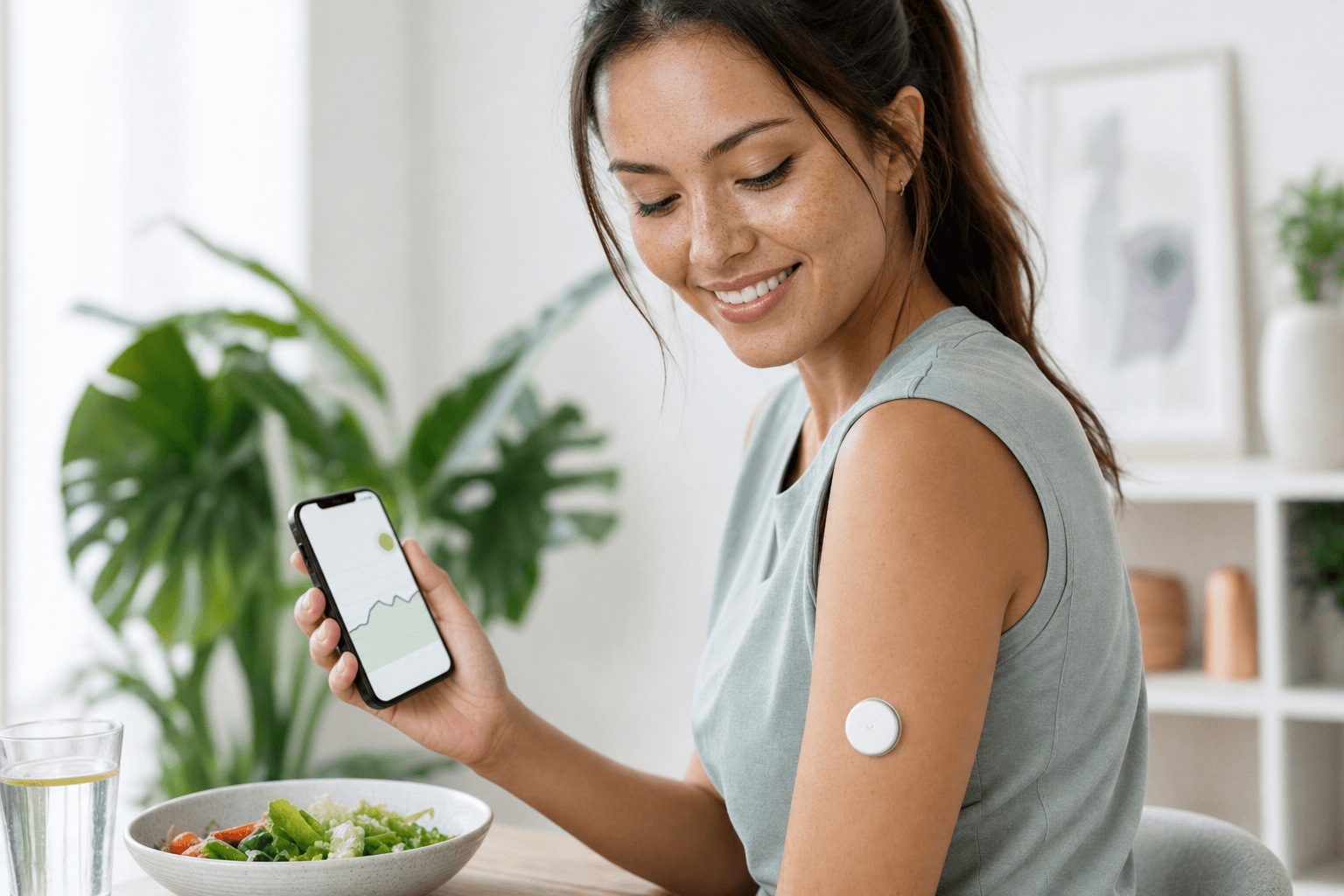
The GS1 is designed to be worn safely through everyday activities. The sensor is small and discreet, sits on the upper arm, and is applied with an easy dual-spring applicator for a faster, less painful insertion. It is waterproof for bathing, showering, swimming and exercise, to a maximum depth of 1 meter and a maximum of 1 hour, so normal life can continue around it.
When to involve your healthcare team
As accurate and convenient as a CGM is, it is a tool that supports clinical care rather than replacing it. If you are unwell, if readings do not match how you feel, or if you are making important decisions about treatment, your doctor, nurse or diabetes team should be involved. They can interpret your data in the full context of your health, which a device alone cannot do.
Bringing it together
The GS1 combines single digit MARD figures of 8.7 percent for ages 3 to 17 and 8.83 percent for ages 18 and over with EU MDR CE certification granted in 2023. It is approved from age 3 in select countries and from age 18 in others, and it suits a broad range of people with different glucose related needs. Together these qualities support the brand promise of industry leading accuracy and the freedom to manage diabetes with confidence.
If you would like to ask whether the GS1 is suitable for you in Mauritius, or to learn more about the device, you are welcome to send an email to [email protected] and begin the conversation.
Clearer glucose context supports better care conversations. Explore the wider Medtech Medtech resource network.


