
14 days, no fingersticks: what wearing the GS1 is like
12 June 2026 · By Sibionics · Updated 17 June 2026
Two weeks with a quiet companion
One of the most common questions people in Mauritius ask before trying a continuous glucose monitor is simply, what is it actually like to wear? It is a fair question. The idea of a sensor on your arm for 14 days can sound strange at first. In practice, most people find the SIBIONICS GS1 fades into the background of daily life within a day or two. This article describes what to expect across a sensor cycle. It is general guidance, not medical advice, so your doctor or diabetes team remains the right place for personal questions.
Applying the sensor
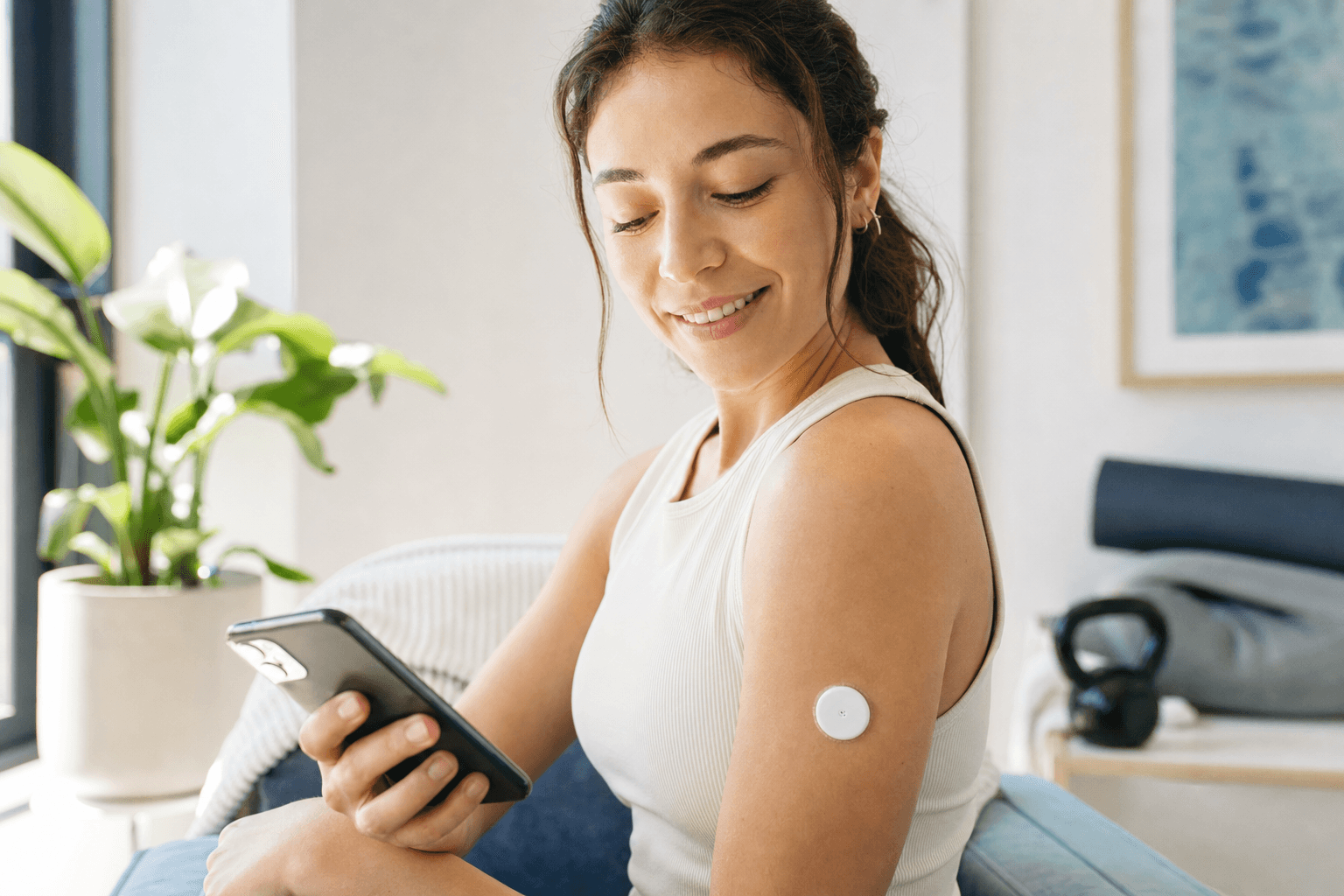
The first step is putting the sensor on, usually on the upper arm. The GS1 uses an easy dual-spring applicator designed for a faster and less painful insertion. You hold the applicator against the skin, press, and the small, discreet sensor is in place. Many people are surprised by how little they feel. There can be a brief moment of awareness, and then it is done.
Once the sensor is on, you connect it to the SIBIONICS app on your phone, and that is essentially the setup complete.
The first day
Getting used to it
For the first few hours, you may be a little aware of the sensor simply because it is new. This usually settles quickly. The sensor is small and sits flat against the arm, so it stays discreet under a t-shirt or long sleeve. Within a day, most people forget it is there for long stretches at a time.
Watching the readings arrive
This is often the most interesting part. As the sensor begins reporting, you start seeing a fresh glucose reading every 5 minutes on your phone. For many people it is the first time they have ever watched their glucose move in near real time. Seeing the line respond to a meal or a walk can be genuinely fascinating, and it sets the tone for the two weeks ahead.
Life without fingersticks
No pricking, no scanning
Perhaps the biggest day to day difference is what you no longer have to do. The GS1 is calibration free, so there are no routine fingersticks to keep it accurate. There is also no scanning step. You do not need to wave anything over your arm to get a reading. The data simply appears on your phone over Bluetooth, refreshed every 5 minutes.
For people who have spent years pricking their fingers several times a day, this can feel like a real lifting of a burden. Fingertips get a rest, and the small interruptions throughout the day disappear.
Checking in on your own terms
Because the data is always flowing to the app, you can glance at it whenever you like. A quick look before a meal, after exercise, or before bed becomes a natural habit rather than a deliberate testing ritual.
Showers, swimming and the Mauritian climate
Waterproof for everyday water
A sensor you wear for 14 days needs to cope with water, and the GS1 is built for it. It is waterproof and handles bathing, showering, swimming and exercise, to a maximum depth of 1 meter and a maximum of 1 hour. In Mauritius, where a swim in the lagoon or a cool shower after a humid afternoon is part of normal life, this matters a great deal.
You do not need to remove the sensor for these activities, as long as you stay within the depth and time limits. That keeps your data continuous and your routine uninterrupted.
Coping with heat and activity
The island can be warm and active, with plenty of movement and sweat. The sensor is designed to stay attached through daily life. To help it last the full 14 days, it is sensible to apply it to clean, dry skin and to be a little mindful around door frames or towels so you do not knock it.
Sleeping and night time
Because the sensor measures continuously, it keeps working while you sleep, with no action needed from you. Many people find the overnight data especially valuable, since it reveals what happens during hours that finger testing could never capture. You can wake up and look back at the whole night on the app.
Reaching the end of 14 days
Each sensor is worn for 14 days. As the cycle ends, you remove the old sensor and apply a new one to continue your data without a long gap. Some people like to alternate arms for comfort. Over time this fortnightly rhythm becomes a simple, almost automatic routine.
What it adds up to
Wearing the GS1 is, for most people, far less intrusive than they expect. The sensor is small and discreet, the application is quick and comfortable, there are no fingersticks or scanning, and it copes with showers and swimming. What it adds is a steady stream of insight into your own glucose across two weeks at a time.
That insight is most powerful when shared with your healthcare team, who can help you make sense of it. A CGM supports your care, it does not replace it. If you would like to ask about trying the GS1 in Mauritius, you are welcome to email [email protected].
Clearer glucose context supports better care conversations. Explore the wider Medtech Medtech resource network.


